The Ultimate Guide to International eSIMs for Global Travelers
An international eSIM is a digital SIM card that lets you connect to mobile networks in multiple countries without needing a physical card. You buy a plan online, scan a QR code to install it, and activate data the moment you land. This means you can skip hunting for local SIMs and avoid outrageous roaming fees, keeping you connected effortlessly across borders.
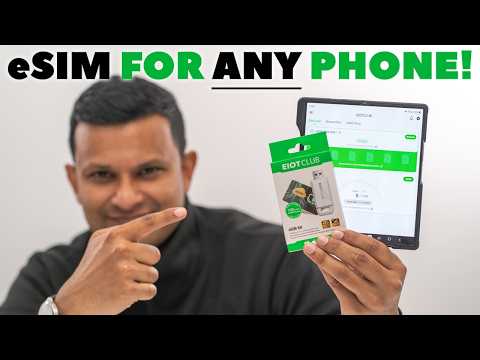
Your Passport to Global Connectivity: How Cross-Border SIM Tech Works
Think of an international eSIM as your digital passport to global connectivity. Instead of swapping physical cards, your device holds a tiny, rewritable chip. When you land in a new country, you simply buy and install a local data plan remotely. The eSIM profile downloads directly to your phone, connecting you to a local network instantly. Tech works by storing multiple operator profiles on that single chip, letting you switch between carriers for the best local rates. You avoid roaming fees and maintain a stable connection, all without fumbling with tiny SIM trays. This cross-border tech transforms your smartphone into a universal key for seamless travel.
What Exactly Happens When You Switch to a Digital Profile for Travel
When you switch to a digital profile for travel, your phone instantly downloads a new connectivity blueprint from the cloud. This eSIM profile replaces your physical SIM’s network instructions, letting you hop onto a local carrier without touching a tiny card. Your device registers with a foreign tower, often within seconds, and you keep your original number active for calls while using the digital plan for data. It’s a seamless swap that feels like simply turning on a clean slate for internet access.
Q: What exactly happens when you switch to a digital profile for travel if I’m mid-flight?
A: Nothing happens until you land and have an internet connection. The profile sits dormant, so you just activate it when you’re ready to roam—no delay, no physical hassle.
Comparing Physical Plastic vs. Embedded Virtual Profiles for Roaming

When comparing physical plastic SIMs to embedded virtual profiles for international roaming, the core distinction lies in physical logistics versus digital flexibility. Plastic SIMs require you to swap cards between journeys, risking loss or damage, while eSIM profiles let you download and activate roaming data instantly without hardware changes. This digital approach means you can carry multiple carrier profiles simultaneously and switch between them mid-trip, avoiding the need to hunt for local SIM vendors. The key advantage for roamers is the instant profile activation upon landing, eliminating the lag of finding and inserting a new plastic card. For multi-country trips, virtual profiles simplify shifting between local data allowances, whereas a plastic SIM forces you into a single carrier’s roaming zone until physically replaced.
Key Providers Shaping the Multi-Network Experience
Providers like Airalo, Holafly, and Google Fi actively shape the multi-network experience by forging direct partnerships with local carriers across dozens of countries. This allows them to instantly switch your international eSIM between available networks, prioritizing signal strength and speed. Dynamic network switching ensures you automatically avoid congestion or dead zones, while apps provide real-time data on which provider is currently active. Some even tier their pricing based on whether you’re using a primary or backup network, offering flexibility for heavy travelers. By distributing your connection across multiple infrastructures, these providers eliminate the risk of relying on a single foreign operator.
In short, key providers orchestrate seamless connections by cycling your eSIM through a curated roster of local networks, ensuring optimal coverage without manual intervention.
Selecting the Best Data Plan for Your Journey
Selecting the best data plan for your journey hinges on matching your travel intensity to a regional or global eSIM. For short trips in one country, a local eSIM data plan offers the best value and speed. If you cross multiple borders, a regional eSIM covering a continent like Europe or Asia eliminates the hassle of swapping profiles. Always verify the plan’s speed tier, as many budget options throttle after a daily cap, which cripples navigation in unfamiliar cities. prioritize plans with instant activation and full network access over cheapest options to ensure reliable maps and messaging.
Regional Bundles Versus Country-Specific Packs: Which Saves More
When comparing regional bundles versus country-specific packs for your international eSIM, the savings depend entirely on your itinerary. A regional bundle, covering multiple neighboring countries, typically offers a lower per-gigabyte cost if you cross borders frequently, as it eliminates the need for separate purchases. Conversely, a country-specific pack is more economical for a single-destination trip, since you avoid paying for coverage you won’t use. The key factor is usage: cross three or more borders, and the regional bundle cost advantage becomes clear, but for a week in one nation, the targeted national plan minimizes waste. Always map your route against eSIM data prices to determine the most cost-efficient choice.
Understanding Fair Usage Policies and Throttling Thresholds
To avoid unexpected slowdowns, you must grasp how fair usage policies govern throttling thresholds on international eSIMs. These policies cap high-speed data at a specific volume, often 500MB or 1GB per day, depending on the local network partner. Once you cross this threshold, speeds drop to a reduced rate, typically 128 or 256 kbps, sufficient only for messaging and basic navigation. To mitigate throttling, follow this sequence:
- Check your plan’s stated fair usage limit in your eSIM provider’s account dashboard before departure.
- Monitor real-time data consumption via the provider’s app or your device’s data tracker.
- Disable background app refresh and automatic updates to stay within the high-speed cap longer.
Top Up or Pay Per Use: Flexibility for Short Trips and Extended Stays
When selecting an international eSIM, the choice between top-up and pay-per-use models offers direct flexibility for varying trip lengths. For short weekend trips, a pay-per-use plan lets you buy only the specific gigabyte amount needed, avoiding waste. Conversely, extended stays benefit from top-up plans; you start with a base data bundle and simply add more data if required, preventing service interruption. This approach is ideal for digital nomads or long-term travelers. Flexible data scaling ensures you never overpay for unused capacity. A key advantage is that you can refill incrementally without committing to a new plan.
Q: How do I decide between top-up and pay-per-use for my trip?
A: Use pay-per-use for trips under a week where data needs are predictable. Choose top-up for longer stays, as you can add small data packs only when your initial allocation runs low, giving you control over budgeting.
Setting Up Your Device for Seamless Roaming
To achieve seamless roaming with an international eSIM, begin by installing the eSIM profile before your departure, using a stable Wi-Fi connection to download and activate it. Ensure your device’s data roaming toggle is enabled in the cellular settings, and set the eSIM as your primary data line while keeping your physical SIM active for calls.
Proactively disable automatic network selection, choosing your provider’s recommended partner networks manually to prevent connection drops.
Finally, verify APN settings match the eSIM’s data configuration, and test connectivity by switching to airplane mode for a fresh network handshake—ensuring instant data access as soon as you land.
Quick Activation Steps for iPhones, Androids, and Latest Smartphones
For immediate connectivity, begin by scanning the QR code provided by your eSIM provider directly in your phone’s cellular settings. On iPhones, navigate to Settings > Cellular > Add Cellular Plan and scan the code. Android users typically go to Settings > Connections > SIM Manager > Add Mobile Plan. Most latest smartphones now support a direct tap-to-install link, bypassing manual entry. After scanning, label the plan (e.g., “Travel Data”) and set it as default for mobile data. This ensures instant network activation upon reaching your destination. A quick toggle of Airplane Mode finalizes the handshake, enabling seamless roaming within seconds.
Managing Dual SIM Mode: Keeping Your Home Number Active
To keep your home number active while roaming, configure your device’s dual SIM mode so your primary eSIM remains on for calls and SMS, while an international eSIM handles mobile data. Designate your home line for voice and messaging, but toggle off data roaming on that line to avoid unexpected fees. Enable “Ask Before Switching” if available, ensuring you manually choose the correct SIM for outgoing calls. This setup allows seamless reception of two-factor authentication codes and family calls without swapping physical cards.
Managing Dual SIM Mode lets you keep your home number active for essential communication while relying on an international eSIM for affordable data during roaming.
Troubleshooting Common Activation Errors and Profile Install Issues
When an international eSIM fails to activate, first confirm your device is connected to Wi-Fi, as data-dependent provisioning often stalls offline. If the profile won’t install, ensure no previous carrier profile is locked to your device, and manually scan the QR code instead of using a link. Persistent activation errors frequently stem from entering the incorrect APN; manually input “esim” or your provider’s specific APN in cellular settings. Rarely, a temporary network time mismatch blocks profile installation, so toggling airplane mode for 30 seconds often solves this.
Q: Why does my eSIM profile say “Not Installed” after scanning?
A: This usually means the QR code has been used beyond its one-time activation limit or your device lacks proper entitlement. Delete the failed profile, request a fresh QR from your provider, and install again on a stable Wi-Fi connection.
Coverage, Speed, and Network Reliability Abroad
An international eSIM’s true value hinges on consistent, real-world performance across borders. Coverage relies on partnerships with multiple local carriers, not a single network; this ensures you latch onto the strongest signal available in each country, avoiding dead zones. Speed is dictated by roaming agreements, with top-tier providers offering local LTE and 5G speeds that mirror a domestic connection, rather than throttled, shared data. Network reliability abroad means seamless handoffs when crossing borders—unlike a physical SIM, an eSIM can preload multiple carrier profiles, so you never suffer a “no service” gap between regions.
The key is redundancy: a quality international eSIM routes you through the fastest local tower, not a distant home network, eliminating slow, unstable connections.
For practical use, always verify the eSIM’s carrier list for your destination; a single partner often fails in rural areas, while multi-carrier access ensures stable, high-speed data everywhere.
How Local Partner Carriers Affect Your Connection Quality
When you use an international eSIM, your connection quality hinges on the specific local partner carriers it roams onto. These partners dictate your real-world speeds and reliability. Your eSIM’s performance depends entirely on partner carrier selection, as a premium-tier partner offers faster LTE/5G https://baztel.co/esim-plans/esim-china-mainland while a budget-tier one can leave you with throttled data or no service in crowded areas. To maximize stability:
- Check which local networks your eSIM provider partners with before traveling.
- Prioritize providers that contract with top-tier local carriers, not just the cheapest options.
- If your connection drops, manually switch to a different partner carrier in your device settings.
Navigating 5G, LTE, and Tiered Speeds in Different Regions
When hopping between countries with your international eSIM, you’ll hit varying 5G, LTE, and tiered speed limits based on local infrastructure. In Europe and East Asia, 5G is often automatic and fast, while in parts of the Americas or Africa, you might default to LTE or even 4G. Tiered data means a “high-speed” plan can throttle after a cap, so double-check your eSIM’s fine print for each region. To avoid surprises:
- Check your eSIM’s coverage map for 5G availability per country.
- If 5G is spotty, manually lock your phone to LTE for more stable speeds.
- Monitor your data usage—tiered plans often cut you to 2G/3G after the limit in slower zones.
When to Expect Dropouts: Urban Centers, Rural Routes, and Transit Hubs
Signal dropouts with an international eSIM follow predictable geographic patterns. In dense urban centers, network congestion during peak hours often causes intermittent loss, though coverage remains broad. On rural routes, gaps widen significantly due to sparse cell tower placement, leading to prolonged dropouts, especially in valleys or forested areas. Transit hub connectivity faces its own challenges: inside train stations or airport terminals, thick concrete and metal structures degrade signals, causing abrupt cutoffs during platform changes or underground movement. Rural dropouts are more predictable by route than by time, unlike urban fluctuations tied to commuter surges. To minimize disruption:
- Map your route for known dead zones using carrier coverage tools before departure.
- Download offline maps and critical data while in stable urban zones.
- Switch to a local Wi-Fi network when passing through transit hub corridors.
Security Considerations for Global Mobile Use
When using an international eSIM, your primary security consideration is the trustworthiness of the remote SIM provisioning profile. Because your device downloads credentials over the air, always activate an international eSIM only through a verified network operator or reseller, avoiding public or unencrypted QR code sources. Can I safely activate an eSIM on public Wi-Fi? No; always use a known secure connection or your primary cellular data to prevent a man-in-the-middle attack during profile installation. Post-activation, disable automatic network selection on your device to prevent connecting to rogue towers that may intercept traffic. Regularly delete unused eSIM profiles from your device’s settings to minimize the attack surface, as each stored profile contains persistent authentication keys. Finally, treat your eSIM with the same caution as a physical SIM—never share your activation QR code or SM-DP+ address with anyone.
Encryption Standards Across Different Third-Party Virtual Networks
When using an international eSIM, data passes through the third-party virtual network operator’s infrastructure before reaching the local carrier. Encryption standards here vary, with most providers employing AES-256 for user data but some using weaker TLS 1.2 configurations for signaling traffic. A critical vulnerability arises if the virtual network bridges traffic over an unencrypted IPsec tunnel between regions. Users should verify that the provider mandates end-to-end encryption for all relayed packets, as fragmented encryption chains can expose metadata in transit.
- AES-256 protects the user payload, but the key management protocol varies per operator.
- Some virtual networks re-encrypt traffic only at their own nodes, leaving segments unencrypted.
- WireGuard-based tunnels offer lower latency with stronger default cipher suites than OpenVPN setups.
Protecting Personal Data While Using Shared Infrastructure
When using an international eSIM, your data travels through shared cellular and Wi-Fi infrastructure, increasing exposure to interception. Always activate the eSIM’s built-in VPN or a trusted third-party one to encrypt your traffic, preventing unauthorized access on public networks. Isolated eSIM profiles keep your primary number and personal files separate, reducing the risk of cross-device leaks. Even temporary access to a router or hotspot can expose metadata if you neglect to disable automatic file sharing. Q: How do I secure personal data on shared hotel or airport Wi-Fi? A: Use the eSIM’s encrypted data channel instead, avoid entering sensitive login details, and manually disconnect Wi-Fi when not actively browsing.
Emergency Calls and Location Services Across Multiple Jurisdictions
When using an international eSIM, emergency call routing across multiple jurisdictions becomes a critical variable. Your device may default to the local carrier’s emergency number, not your home country’s. In the EU, dialing 112 works universally, but in the US, 911 is the standard, and Japan uses 110. Location services also vary: some networks automatically share your GPS coordinates with dispatchers, while others require manual entry—critical data that can fail if roaming data is slow. **Q: Can an international eSIM ensure my precise location is sent to emergency services abroad?** A: Not reliably—always verify local emergency numbers and be ready to verbally describe your location, as geolocation accuracy depends on the local network’s infrastructure, not just your eSIM.
Cost Comparison: Virtual Profiles vs. Traditional Roaming Packages
When you compare cost comparison virtual profiles against traditional roaming packages, the savings are usually obvious with an international eSIM. Traditional roaming often slaps daily fees or high per-MB rates onto your bill, which can quickly pile up over a week-long trip. In contrast, virtual profiles from an eSIM provider let you buy a local or regional data plan upfront for a flat, often drastically lower price. You skip those surprise charges entirely. For example, a $10 eSIM data package for 5GB might replace a $50 roaming pass from your home carrier. The flexibility also cuts costs—you can top up only what you need, avoid long-term contracts, and switch profiles freely without penalty.
Hidden Fees to Watch for in Day Passes and Subscription Models
When comparing day passes to subscription models for international eSIMs, hidden fees often lurk in data throttles after a “fair usage” cap. Day passes may advertise a flat rate, but fine print could add per-minute charges for outgoing calls or SMS. Subscription models sometimes charge a reactivation fee if your plan lapses between trips, or inflate costs with a mandatory “platform” or “top-up” service fee. Always check if your day pass automatically renews at a premium rate once the initial period expires. To avoid surprises, prioritize options with transparent data allowance policies that explicitly list every add-on cost before purchase.
Bulk Purchasing for Frequent Flyers: Annual Plans and Multi-Region Deals
For frequent flyers, annual eSIM plans provide significant cost savings compared to buying single trip data packs each month. These plans often cover 50+ countries with a fixed GB allowance, eliminating per-activation fees. Multi-region deals, such as pan-European or Asia-Pacific bundles, let you pay once for a year of rotating coverage across key destinations—ideal for unpredictable travel patterns. Bulk purchasing often includes tiered data pools (e.g., 20GB, 50GB) that auto-renew, reducing per-GB cost by up to 60% versus standard roaming. Users should verify that the plan’s region list matches their specific routes, as some exclude high-cost zones like Japan or Switzerland.
Bulk purchasing annual eSIM plans and multi-region deals cuts per-trip data costs for frequent flyers, offering predictable pricing and broad coverage without daily roaming charges.
Prepaid vs. Postpaid Options for Business Travelers and Digital Nomads
For business travelers and digital nomads, choosing between prepaid and postpaid eSIM options hinges on usage patterns. Prepaid plans offer strict budget control with no surprise bills, ideal for short, predictable trips. Postpaid plans, conversely, provide continuous connectivity across months without manual top-ups, suiting long-term nomads. The key differentiator is flexibility versus commitment: prepaid allows easy plan switching per destination, while postpaid locks you into a provider but often includes global data pools and professional support.
Q: Should a frequent traveler choose prepaid or postpaid eSIM?
A: Prepaid is better for irregular or short stays; postpaid suits constant travelers needing reliable, hands-off service across multiple countries.
Future Trends Shaping Cross-Border Mobile Technology
Future trends are collapsing the barriers between domestic and international connectivity, with international eSIM technology evolving to offer seamless, multi-network bonding. Instead of switching carriers, your device will intelligently aggregate signals from local and global providers, ensuring steadfast connectivity in transit. A pivotal shift is towards AI-driven dynamic switching, where your eSIM autonomously selects the strongest, most cost-effective local network without user input. This includes automatic fallback to satellite connectivity when terrestrial networks are absent, ensuring perpetual roaming for the first time. Devices will natively manage multiple active eSIM profiles, blending a home-country data plan with a regional prepaid profile, ending the era of physical SIM management and opaque roaming fees.
Impact of IoT and Wearables on Multi-Country Connectivity
The proliferation of IoT sensors and multi-country wearable connectivity directly reshapes how international eSIM profiles are utilized. Smartwatches now auto-activate local data plans upon crossing borders, eliminating manual carrier switching. Similarly, asset trackers in logistics use eSIMs to maintain seamless roaming across dozens of networks, ensuring real-time location updates without downtime. This shifts the burden from per-device provisioning to centralized management of virtual SIM profiles, allowing a single wearable to function in Europe, Asia, and North America without hardware swaps. The result is persistent, subscription-based linkages that bypass traditional SIM logistics.
Regulatory Shifts in SIM Locking and Provider Portability
Regulatory shifts are making it much easier to switch providers when traveling. Countries are now mandating that devices sold locally must be unlocked after a short period, directly benefiting international eSIM users. This means you can buy a phone in Japan, have it unlocked within 60 days, and instantly load a regional eSIM plan in Europe without buying a new device. Provider portability rules also force networks to release your number quickly for eSIM transfer, ending the hassle of waiting days for a QR code. These changes turn your phone into a truly global tool.
Potential for Universal Profiles and Carrier-Free Devices
Universal profiles and carrier-free devices are making international travel smoother by letting you switch networks without swapping SIMs or hunting down local stores. Imagine your phone automatically loading a local profile as you land, using embedded connectivity profiles that work across any compatible network. This means your device could stay active globally, even if you skip buying a traditional plan. Carrier-free hardware would let you choose data from any provider on the fly, billing straight to your account. It’s like your phone always knows the best local deal, keeping you connected without fuss or extra plastic cards.